
- by airquippipetool
- . 12 Jan 2026
How Loop Systems Help Reduce Noise in Large-Scale Compressed Air Pipework?
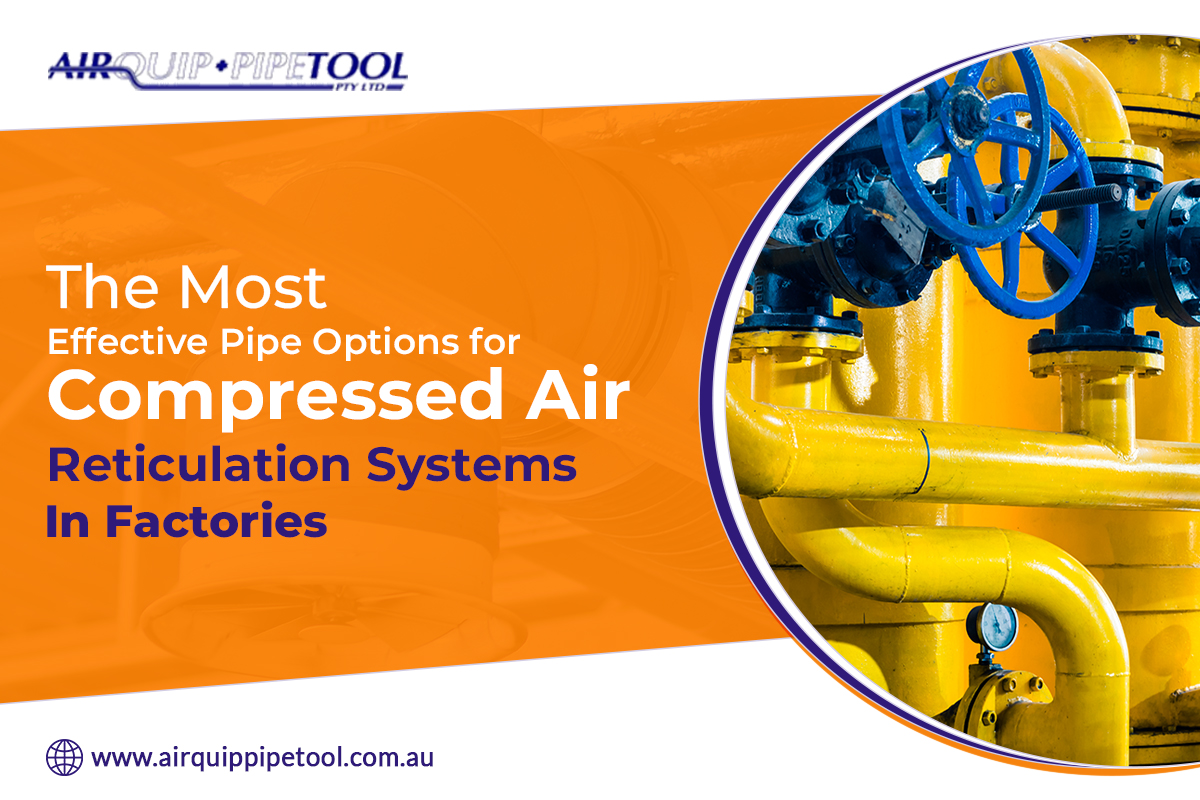
A well-designed compressed air reticulation system is the backbone of any industrial operation, especially in factories. The choice of pipe options has a direct impact on the overall performance of the system, affecting everything from air quality to pressure consistency. By choosing the right pipes, you can enhance the reliability and efficiency of your compressed air reticulation system, reducing costs and increasing output. In this blog, we’ll examine the best pipe choices for your factory’s compressed air needs, helping you make an informed decision for optimal results.
Here are some important aspects to consider when choosing pipes for compressed air reticulation systems:
Stainless steel is a highly durable material commonly used for compressed air piping systems. Known for its strength and corrosion resistance, stainless steel is ideal for environments that require a clean, robust, and long-lasting solution.
Advantages:
Disadvantages:
Aluminium is a lightweight, corrosion-resistant material often used in compressed air systems. Known for its smooth internal surface, aluminium helps maintain air quality and ensures the system remains efficient over time.
Advantages:
Disadvantages:
HDPE (High-Density Polyethylene) piping is a versatile, durable material commonly used for compressed air systems. Known for its flexibility and resistance to various environmental factors, HDPE is an excellent choice for applications requiring low maintenance and long-lasting performance. It offers three primary coupling options: Compression, Socket-Fusion (welded), and Electro-Fusion (welded), each providing reliable connections.
Advantages:
Disadvantages:
KWIKfit is a semi-rigid nylon pipe system designed for easy installation of compressed air systems. Its flexibility, ease of use, and reusable fittings make it a popular choice for both industrial workshops and home garages.
Advantages:
Disadvantages:
In conclusion, choosing the right materials for your compressed air reticulation system is essential for ensuring both performance and longevity. Whether you prefer the ease of installation of KWIKfit, the robustness of stainless steel, the flexibility of HDPE, or the corrosion resistance of aluminium, it is important to rely on professional pipework installation services for a reliable setup.
Airquip and Pipetool Pty Ltd specialises in providing expert advice and high-quality installation services tailored to your specific needs. With reliable solutions and seamless service, you can trust us to meet all your compressed air system requirements with precision and care.
 " alt="">
How Loop Systems Help Reduce Noise in Large-Scale Compressed Air Pipework?
" alt="">Condensation Management With Compressed Pipework: Dealing With Moisture in the Line!
 " alt="">
Pressure Drop In Compressed Air Reticulation Systems: Causes, Consequences & How to Minimise It?
Noise inside industrial facilities is a technical indicator of inefficiency, pressure instability, and excessive energy loss. When pressure drops inside your compressed air pipework, the system compensates by accelerating airflow, […]
Condensation occurs when moisture in compressed air cools and turns into liquid after compression. When left unchecked, it travels through the system and can damage tools, machinery, and air-dependent equipment. […]
An efficient industrial air network is about ensuring steady pressure, minimal energy loss and reliable performance from the first compressor discharge to the tool on the line. With well-designed compressed […]
Copyright © 2026 airquippipetool | All rights reserved