
- by airquippipetool
- . 12 Jan 2026
How Loop Systems Help Reduce Noise in Large-Scale Compressed Air Pipework?
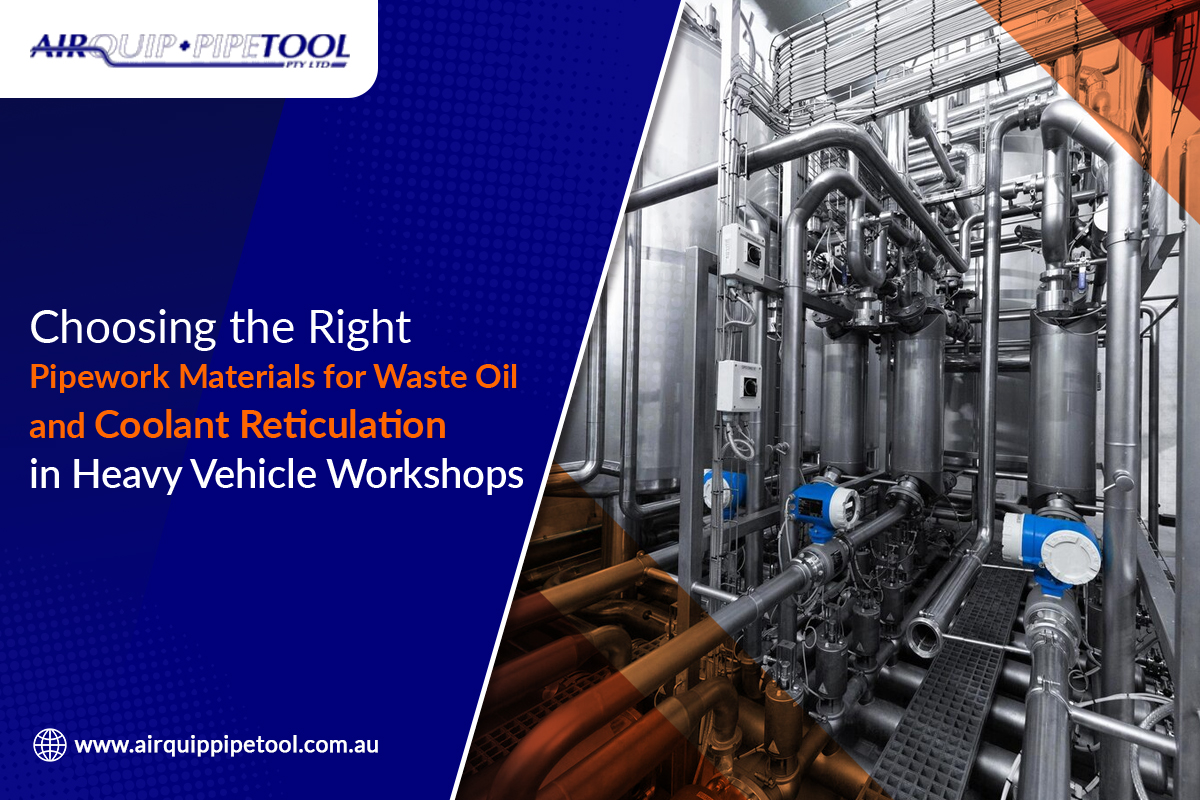
At Airquip and Pipetool, we specialise in designing and installing waste fluid reticulation systems for heavy vehicle workshops. A properly designed system not only ensures that waste fluids are handled safely, but also optimises workshop efficiency and helps reduce the risk of contamination. In this post, we’ll explore how to select the right pipework materials for these systems and why choosing the best materials is so important.
Before diving into the specifics of pipework materials, it’s worth discussing the advantages of a centralised waste fluid system versus a localised collection system (i.e., individual waste fluid containers at each service bay).
Now that we’ve covered the benefits of a centralised system, let’s look at how to select the right pipework materials for the job.
When designing a waste fluid reticulation system, it’s essential to choose the right materials that will ensure durability, reliability, and safety. The pipes must withstand the corrosive nature of oils, coolants, and other fluids commonly used in heavy vehicle maintenance. At Airquip and Pipetool, we focus on using materials that are robust, resistant to corrosion, and capable of handling the volumes and pressures involved in a workshop’s waste fluid system.
Stainless steel is our go-to material for waste fluid reticulation systems in heavy vehicle workshops. Here’s why:
HDPE is another excellent choice for waste fluid pipework, offering a balance of cost-effectiveness and chemical compatibility:
Aluminium is another material we use in specific situations for waste fluid systems, particularly when a lightweight option is required.
While there are many materials that might seem suitable for waste fluid systems, we avoid using certain materials due to issues like corrosion, brittleness, or chemical incompatibility with workshop fluids. These include:
At Airquip and Pipetool, we understand that the materials used in a waste fluid reticulation system play a critical role in ensuring the safety, efficiency, and longevity of the system. By choosing materials like stainless steel, HDPE, and aluminium, we ensure that your workshop’s waste fluid collection system will stand up to the demanding conditions of a heavy vehicle workshop.
A centralised waste fluid system provides numerous benefits, including increased safety, improved efficiency, and environmental protection. By installing a robust, well-designed pipework system with the right materials, you can streamline operations, reduce maintenance costs, and ensure that waste fluids are disposed of safely and efficiently. If you’re looking to install or upgrade a waste fluid reticulation system in your heavy vehicle workshop, Airquip and Pipetool can help. Our expertise and commitment to quality mean that we deliver reliable, cost-effective systems tailored to your needs
.
 " alt="">
How Loop Systems Help Reduce Noise in Large-Scale Compressed Air Pipework?
" alt="">Condensation Management With Compressed Pipework: Dealing With Moisture in the Line!
 " alt="">
Pressure Drop In Compressed Air Reticulation Systems: Causes, Consequences & How to Minimise It?
Noise inside industrial facilities is a technical indicator of inefficiency, pressure instability, and excessive energy loss. When pressure drops inside your compressed air pipework, the system compensates by accelerating airflow, […]
Condensation occurs when moisture in compressed air cools and turns into liquid after compression. When left unchecked, it travels through the system and can damage tools, machinery, and air-dependent equipment. […]
An efficient industrial air network is about ensuring steady pressure, minimal energy loss and reliable performance from the first compressor discharge to the tool on the line. With well-designed compressed […]
Copyright © 2026 airquippipetool | All rights reserved